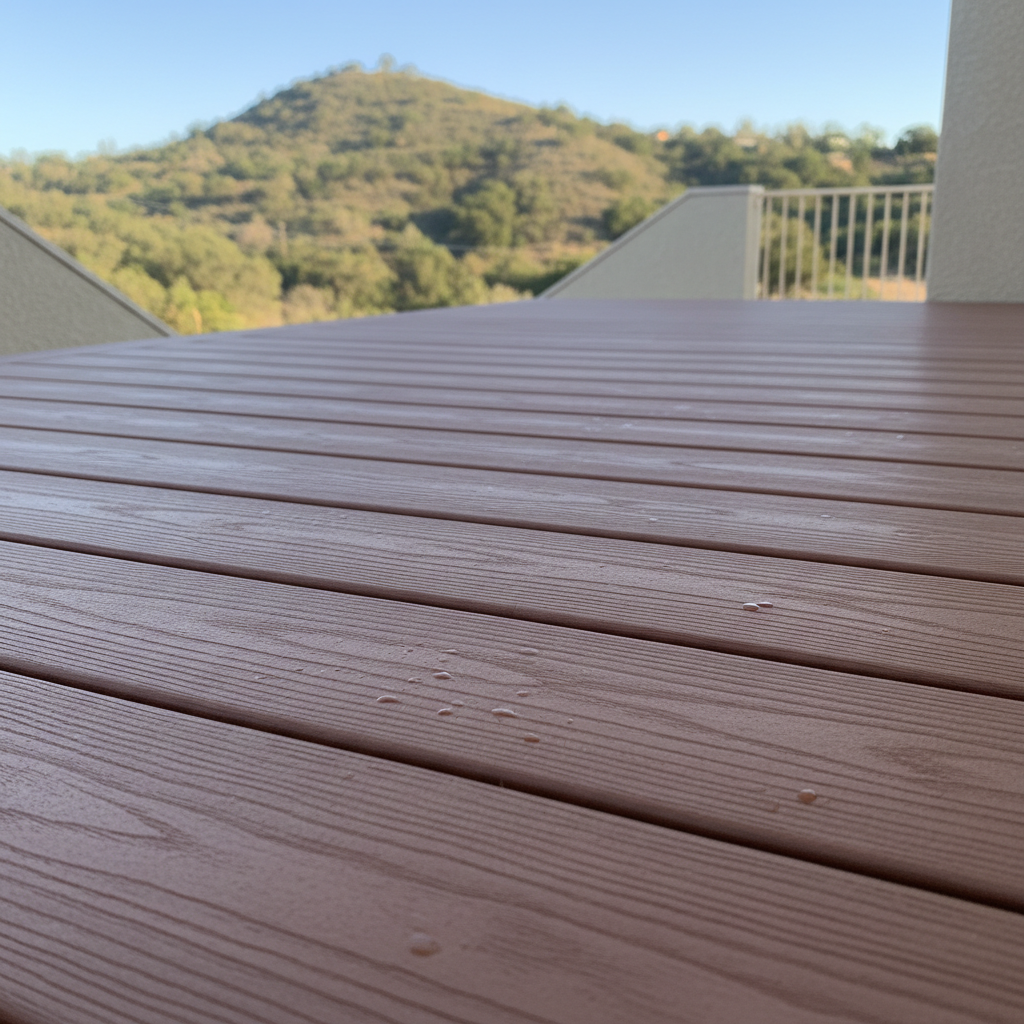
What's the real deal with composite decking? Is it just plastic?
That's a question I hear a lot, and it's a good one because there's plenty of misunderstanding out there. No, it's definitely not just plastic. Most quality composite decking actually blends wood fibers with recycled plastics. Think of it as a really tough, engineered material. The wood part gives it that natural feel and some structural strength, while the plastic makes it super resistant to rot, bugs, and moisture. It's designed to give you the best of both worlds – the look of real wood without all the constant upkeep.
Does composite decking get hotter than wood in our Temecula sun?
Okay, this is a big concern, especially with our long, hot summers here in Temecula. Generally, yes, composite decking can get hotter than natural wood, particularly the darker colors. It's just how these materials take in and hold onto heat. I've seen some decks in full sun, especially those dark gray or brown boards, get pretty warm on bare feet. That said, manufacturers are always making things better. Many now offer 'cool touch' technologies or lighter color options that reflect more sunlight. If you're sensitive to heat or your deck bakes in the direct afternoon sun, I always suggest going for lighter shades or checking out those newer, cooler technologies. You'll still want to wear sandals, but it won't feel like walking on hot coals, you know?
How long can I really expect a composite deck to last here?
This is where composite decking truly shines when you compare it to wood. If it's installed correctly and you do some basic cleaning, you can expect a composite deck to last a very long time – often 25 to 30 years, sometimes even more. Most manufacturers back their products with warranties in that range, which really tells you something. Our Temecula climate, with its dry heat and occasional heavy rains, is actually pretty good for composite. You won't have the constant humidity problems that can plague wood in other regions. Here at Apex Deck Solutions, we make sure everything's done by the book, so you get every bit of that lifespan out of your investment.
Is composite decking truly maintenance-free?
I wish I could say yes, but 'maintenance-free' is a bit of a marketing myth for anything outdoors. 'Low maintenance' is a much more accurate term. You won't be sanding, staining, or sealing it every couple of years like you would with wood, and that's a huge win. But you still need to clean it. Dirt, pollen, leaves, and even things like spilled barbecue sauce can build up and lead to mildew or stains if you just leave them. A good sweep and an occasional wash with soap and water – or a composite deck cleaner – will keep it looking great. It's like washing your car; it still needs a bath now and then to stay shiny.
What about fading and scratching? Will it still look good after a few years?
Early composite decks definitely had some issues with fading, especially the uncapped varieties. But modern composite decking, particularly the capped boards (which have a tough outer shell), resists UV fading much better. Manufacturers have really upped their game with UV inhibitors in that cap layer. As for scratching, it's pretty tough, but it's not indestructible. Dragging heavy furniture, dropping sharp tools, or letting pets with unclipped nails run wild can still cause scratches. The good news is that minor scuffs often blend in, and deeper scratches are usually localized. It's tougher than wood in many ways, but you still need to treat it with a little care.
Can I really save money with composite decking in the long run?
Upfront, composite decking usually costs more per lineal foot than pressure-treated lumber. There's no getting around that initial sticker shock for some folks. But when you look at the total cost of ownership over 10, 15, or even 20 years, that's where the savings really kick in. Think about it: no staining, no sealing, no replacing rotted boards. If you factor in the cost of materials and your time (or paying someone else) for those maintenance tasks every few years, composite often comes out ahead. It's an investment that pays off by giving you back your weekends and saving you money on upkeep.
Are there any specific considerations for composite decks in Temecula's soil or climate?
Absolutely. One thing we deal with here in Temecula, especially in some of the older neighborhoods or areas with more clay-heavy soil like parts of Wine Country, is ground movement. It's not usually a huge issue, but it means your deck's foundation needs to be rock solid. For composite decks, because the material itself is so stable and doesn't expand and contract as much as wood with moisture changes, a good, stable foundation is even more critical. We always make sure our footings are deep and properly engineered for our local conditions. Also, remember that intense sun exposure I mentioned earlier? It's not just about the heat on your feet; it's also about thermal expansion. Composite boards will expand and contract slightly with temperature changes, so proper gapping between boards during installation is crucial. If you don't leave enough space, you can get buckling or warping. We know these nuances and build accordingly.
What if I want a specific look or color? Are my options limited?
Not at all! This is another area where composite decking has made huge strides. Gone are the days of just a few boring shades of brown and gray. Now, you can find composite boards that mimic the grain and color variations of exotic hardwoods, weathered barn wood, or even modern, sleek finishes. There are multi-tonal boards that give a really natural, streaky look. You can get different board widths, fascia boards, and even curved boards for unique designs. Whether you're going for a rustic feel in a backyard overlooking the vineyards or a contemporary outdoor living space in a newer tract home, there's a composite product out there that can match your vision. It's pretty incredible how far the aesthetics have come.