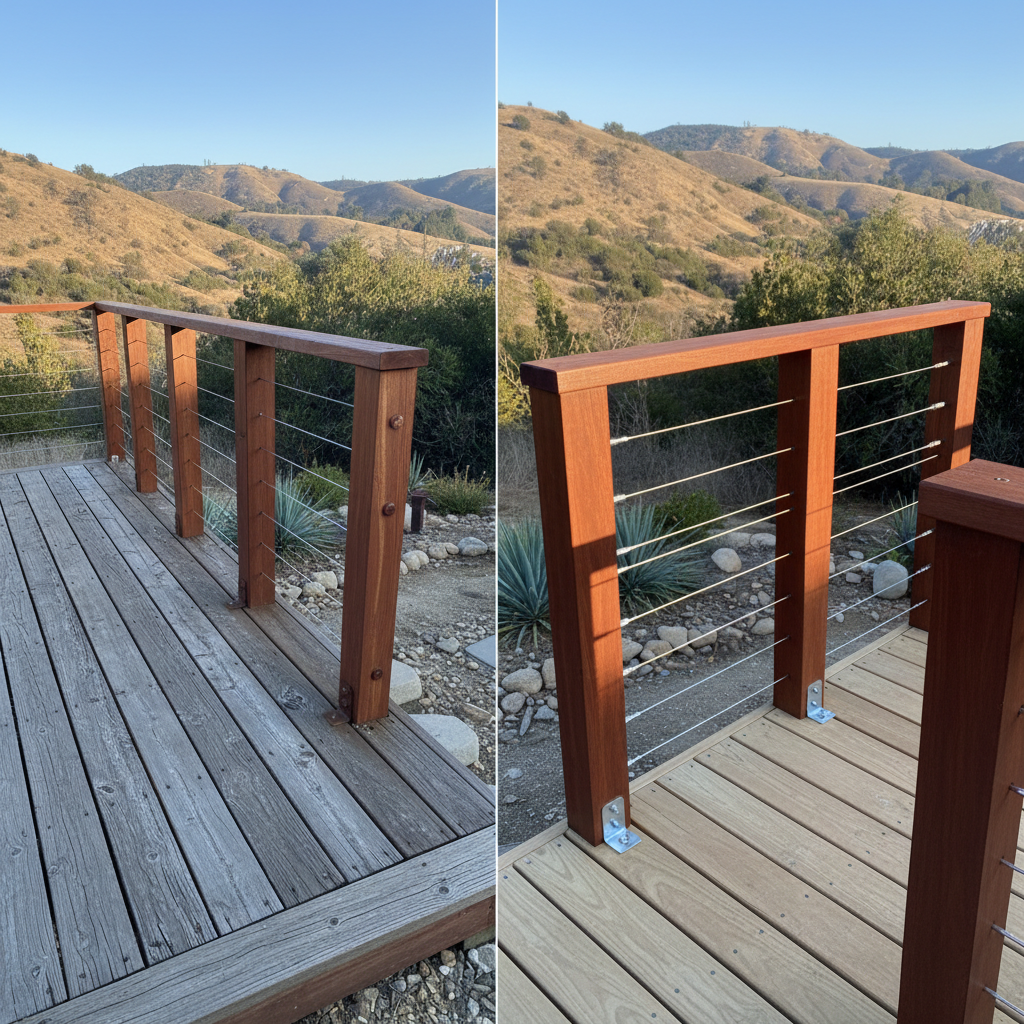
So, you're thinking about a new deck, or maybe just giving an old one a refresh, and you've hit the railing decision. It's not just about picking a material, you know? How that railing actually gets installed makes a huge difference in how it looks, what it costs, and how long it'll actually last. Here in Temecula, I usually see two main approaches: post-to-post and over-the-post. Let's dig into them a bit.
What's the Deal with Post-to-Post Railings?
This is probably what pops into your head when you picture a deck railing. You've got your main structural posts – usually 4x4s or 6x6s – that stick up from the deck frame. Then, the railing sections themselves, whether they're wood balusters, metal pickets, or glass panels, run right between these posts. The top rail then sits on top of the balusters or infill, connecting one post to the next. You'll clearly see the posts at the corners and spaced out along the railing.
The Good Stuff:
- Saves Money: Generally, this method uses less material for the top rail since it stops and starts at each post. That can definitely save you some cash on materials and labor.
- Strong and Stable: When we build these correctly, they're super sturdy. The posts anchor directly to the deck frame, giving you a really solid foundation.
- Classic Look: It's a timeless design, really. Works with pretty much any deck style, from traditional wood to modern composite.
- Easier Repairs: If a section gets damaged, it's often simpler to just replace that one part between two posts without messing with the whole run.
The Not-So-Good Stuff:
- Visual Breaks: Those visible posts can definitely chop up your view, especially if you've got a killer panorama of the vineyards or the hills.
- More Places for Water to Sit: Where the top rail meets the post, you've got seams. If those aren't sealed perfectly, water can collect there. With our occasional heavy rains, that can lead to rot over time, especially if it's wood.
And What About Over-the-Post Railings?
This style, in my humble opinion, looks a bit more refined. Instead of the top rail stopping at each post, it just flows right over the tops of them, continuously. We often route or notch the posts themselves to let the rail pass smoothly over them, which creates a much more seamless, uninterrupted look.
The Good Stuff:
- Sleek, Uninterrupted Look: This is the big one, no doubt about it. That continuous top rail really opens up your sightlines. It's a cleaner, more modern aesthetic that many homeowners in newer developments like Harveston or Wolf Creek are really leaning towards.
- Smoother Feel: No bumps or breaks in the handrail means a nicer, more comfortable grip as you walk along.
- Less Water Intrusion: With a continuous top rail, you get fewer exposed end grain cuts and joints for water to sneak into. That can actually improve durability, especially for wood railings.
The Not-So-Good Stuff:
- Higher Cost: You're usually looking at more material for that continuous top rail, and the installation is just more intricate. Cutting and fitting the rail to flow over the posts takes more time and skill, so expect higher labor costs.
- More Complex Repairs: If a section of that continuous top rail gets damaged, replacing it can be a much bigger job since it's integrated over multiple posts.
- Less Common for DIY: While some homeowners are pretty handy, getting this right takes serious precision. It's typically a job for pros like us at Apex Deck Solutions, don't you think?
Which One Should You Pick for Your Temecula Deck?
Honestly, both are solid choices; it just depends on what you care about most. If budget is your number one concern and you like a traditional look, post-to-post is a fantastic, reliable option. It's sturdy, looks good, and won't completely drain your bank account.
However, if you're chasing that high-end, custom look, and you really want to maximize your views – which, let's be real, is a huge draw for living here – then over-the-post is absolutely worth the extra investment. That uninterrupted line truly makes a difference, giving your deck a more spacious and luxurious feel. Plus, with fewer spots for water to sit, it can be a bit more forgiving in the long run against our intense summer sun and those occasional heavy winter rains. You're getting a more refined finish that often adds more curb appeal and value to your home.
Ultimately, it all comes down to your personal style and budget. I always recommend coming out to look at your specific deck and talk through your options. We can show you examples and help you visualize what each style would look like on your home.